Fringe University
  • Home
    • About Us
    • Sponsors
    • Testimonials
  • Class or Visit
    • Perform >
      • Performing Program Details
    • Longer Class or Visit
    • Full Festival Class
    • Class Ideas
  • Artist Programme
  • Contact Us

Understanding Structures

8/14/2012

0 Comments

 
Our day started with Structures of the Fringe Festival at Summerhall. We checked in regarding our involvement with our company liasons. We continued to try and understand what draws companies her if not for financial gain, and it really began to seem as though our students were getting a better feel for what the festival has to offer as a long-term investment. 

We are working towards a comprehensive understanding of the different aspects of the festival including the Fringe Society, Venues, and Companies and began to discuss briefly the other Fringes around the globe, and how they play into the grand scheme of things. Sam and Hayley were preparing for their shift shadowing the staff at Gryphon Venues later in the afternoon, so Lauren and Leah's debrief helped them to know what they should expect regarding the experience. They discussed their duties regarding the front-of-house staff and Rachel helped them to understand how this deviated from more "typical" front-of-house structures. They touched on the paperless aspect of the venue and how that weaved into their duties regarding Box Office reports.

We discussed the importance of box office reports, seeing as box office payouts aren't completed for some companies until October. Having a signed copy of the box office report is the only way to ensure continuity between the company and the venue. We got some insight into the importance of a Company Manager in a traditional theater setup.

Afterwards, we headed over to the Fringe Fair to take the opportunity to meet various professional organizations including: UK Actors Equity, Tick It (an audience services program that allows patrons to review their experiences at shows online), and E15 Acting School at University of Essex. There were opportunities for students to learn a bit about graduate school opportunities as well as to network with the other participants in the hub.
0 Comments

What Makes a Good Fringe Show?

8/11/2012

0 Comments

 
Picture
Our students spent the morning and early afternoon continuing work with Underbelly Cowgate and Gryphon Venues on NOLA as well as Irreconcilable Differences. They continued to engage in dialogues regarding why each company had chosen to come to the Fringe and what they wanted to glean from their experiences. The students got valuable insight as to why the Fringe Festival is such an important arts arena.


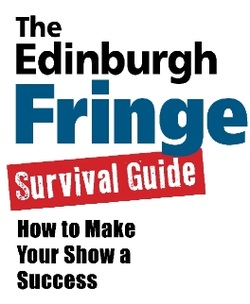
Mark Fisher, theater critic for The Guardian and author of The Edinburgh Fringe Survival Guide sat down with us afterward to discuss sat down with us to discuss what individual factors come into play to determine the difference between "success" and mediocrity at the Fringe. He gave us a couple of examples of shows that might effectively define what it means to be successful. He also invited us to his forum with Maureen Beatty, from The List at Summerhall, Guy Matheson, one of Britain's top solo performers, comedian Ian Fox, and the producer Teresa Burns.

In defining success we looked at some shows from Traverse Theater, the National Theatre of Scotland, Finn Anderson, the Pleasance Grand, and Underbelly, including Bullet Catch, Appointment with the Wicker Man, Streets: the Musical, PEEP, and Sexytime! We discussed the importance of press coverage, topical subject matter, danger/risk, and artistic distinction and how all of these factors come together in different quantities to define individual success for each organization, dependent on their goals. 

Later that evening, some of our students continued to work with I Heart Hamas at Gryphon and PBH's Free Fringe presentation of Overexposed: A Slightly Awkward Peep Show at Finger's Piano Bar.

0 Comments

Structures Class and our Tour of Summerhall

8/6/2012

0 Comments

 
Today we had Structures of the Fringe Festival class. We discussed the specific aims of participants at the Fringe Festivl and got into the nuts and bolts of the festival schedule. Additionally, 2-for-1's at the Fringe began today and we talked about how the Fringe started 2-for-1's as a means by which to effectively jumpstart audience participation at the festival and allow for word-of-mouth promotions to begin amongst folk at the festival.

Ou first assignment was to seek out someone at each of the companies we were paired up with and talk to them a little bit about why they chose to bring a show to the festival, and what they hoped having done so would mean for their careers, long-term.

We were also assigned our major projects-- blogging our experience at the festival and networking with at least ten individuals. Xela and Rachel sent us off with some Fringe U business cards, and we all started focusing on what we'd learned.
Picture
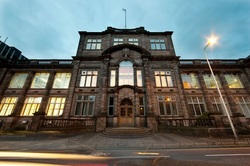
We went to Summerhall, the Fringe's newest and largest venue, to have a discussion with some of the staff there about their roles in promoting, programming, and fulfilling the mission and vision of this new space. Rupert Thomson, our representative on programming, gave us a broad look at the science behind 'picking what's on'. He talked about how to specifically define Summerhall's direction in its first real year in operation, and how important the programme is in doing so. He stressed that although the identity of the space as still settling, this festival programme was the organization's best bet at asserting a thematic motif to their patrons.

Though Rupert continued to stress the importance of "having a way", Dani Rae, the arts industry expert, gave us her opinion on being flexible to your artist's needs. She assured us that it's not what you know, but who you know. She reminded us that taking your artist's livelihood seriously is the only way to get them to trust you with their product. She talked about how she had to give artists homework, because in a lot of cases, their lack of press was based solely on them not knowing how to initiate the process.

Anu Thomson, the Education contact, talked to us a bit about the mission of Summerhall as thought-provoking space and how important it was to keep channels of communication open within a creative space. She is hosting a series of educational and philosophical lectures for artists and reminded us to email her if we'd like to attend.

Finally, Mark the Building Manager, took us on a tour of the space and relayed to us several spooky stories about the history of the building and what strange leftovers could be seen from its former identity as the Royal (Dick) Veterinary School.

0 Comments

Richard Demarco: "Art isn't taken seriously in America. There's no threat of prison."

8/5/2012

0 Comments

 
Picture
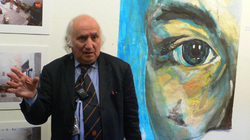
Xela led a discussion with Richard Demarco, CBE in the Red Lecture Theater of Summerhall, the Fringe's newest venue, owned by artist/economist Robert McDowell. Richard, having been to every Fringe since 1947, gave us invaluable insight into the motives of the festival. He reminded all of us that the festival was founded to help "heal the wounds of war" following WWII. Demarco went on to explain that his interest in Eastern European arts was rooted in his appreciation for arts motivated by suffering and by edge.

Xela went on to ask him about him founding the Traverse theater, and Richard explained that the entire operation was conceived, not as a theater or gallery, but as a meeting place for artistically-minded individuals and an aegis for the protection of Eastern European artists whose lives were endangered by their own work.

He explained his work with Tadeusz Kantor was motivated by his desire to save this man from certain death at the hands of the Gestapo, and that their production of The Waterhen meant the difference between critical acclaim and slaughter.

Demarco went on to denounce distinctions within the arts. "A photographer is just an artist who happens to use a camera," he said as he began to pick people out of the audience to have artistic dialogue with so as to affirm that the Fringe had deviated from its original purpose. He was concerned that it had become a circus more fixated on more and more and more arts rather than substantial, compulsive works.

Demarco has produced 8 Kantor shows and 3 shows by Joseph Beuys.

His final words of advice to the audience were to avoid limiting the scope of your artwork at all costs and that we should continuing to question why venues at the Fringe can't exist all year.

0 Comments

    Fringe U Interns '12

    Zach Blackwood and Samantha Hesslein are juniors in Drexel's EAM program completing volunteer work to fulfill Drexel University's experiential learning requirements.

    Archives

    August 2012

    Categories

    All
    Adelaide Fringe
    Drexel University
    Edfringe
    Edinburgh Festival Fringe
    Film Fringe Tour
    Finger's Piano Bar
    Free Fringe
    Fringe Central
    Fringe U
    Gryphon Venues
    How To Sell A Show
    I Heart Hamas
    Irreconcilable Differences
    Marketing
    National Theatre Of Scotland
    Nola
    Overexposed: A Slightly Awkward Peep Show
    Programming
    Richard Demarco
    Summerhall
    Traverse Theatre
    Underbelly Cowgate
    Venue Management
    Week 0
    Week 1
    Week 2
    Week 3
    World Festival Network
    World Fringe Congress

    RSS Feed

Powered by Create your own unique website with customizable templates.